

Great Ideas Are Everywhere
Every year, thousands of founders begin their journey with an exciting product idea.
Some are solving meaningful problems.
Some are introducing new technology.
Others are improving products people use every day.
Yet despite the enthusiasm surrounding innovation, many product startups never reach commercial success.
It is easy to assume the idea simply was not good enough.
In reality, that is rarely the reason.
Most startups struggle because they begin building before they have built the right foundation.
The challenge is not having an idea.
The challenge is knowing how to turn that idea into a product people want, a business that can grow, and a company that investors can believe in.
That journey starts with structure.
Ideas Rarely Fail. Decisions Do.
A great product is the result of hundreds of thoughtful decisions.
Before development begins, founders must answer questions such as:
- Is this solving the right problem?
- Who is the first customer?
- What assumptions should be validated first?
- What should be included in the first version?
- How will the product reach the market?
- What makes it different?
- What technical or regulatory risks exist?
- What milestones need to happen before fundraising?
Founders who answer these questions early often avoid the expensive mistakes that slow so many startups.
The strongest companies are rarely built by moving the fastest.
They are built by making the right decisions at the right time.
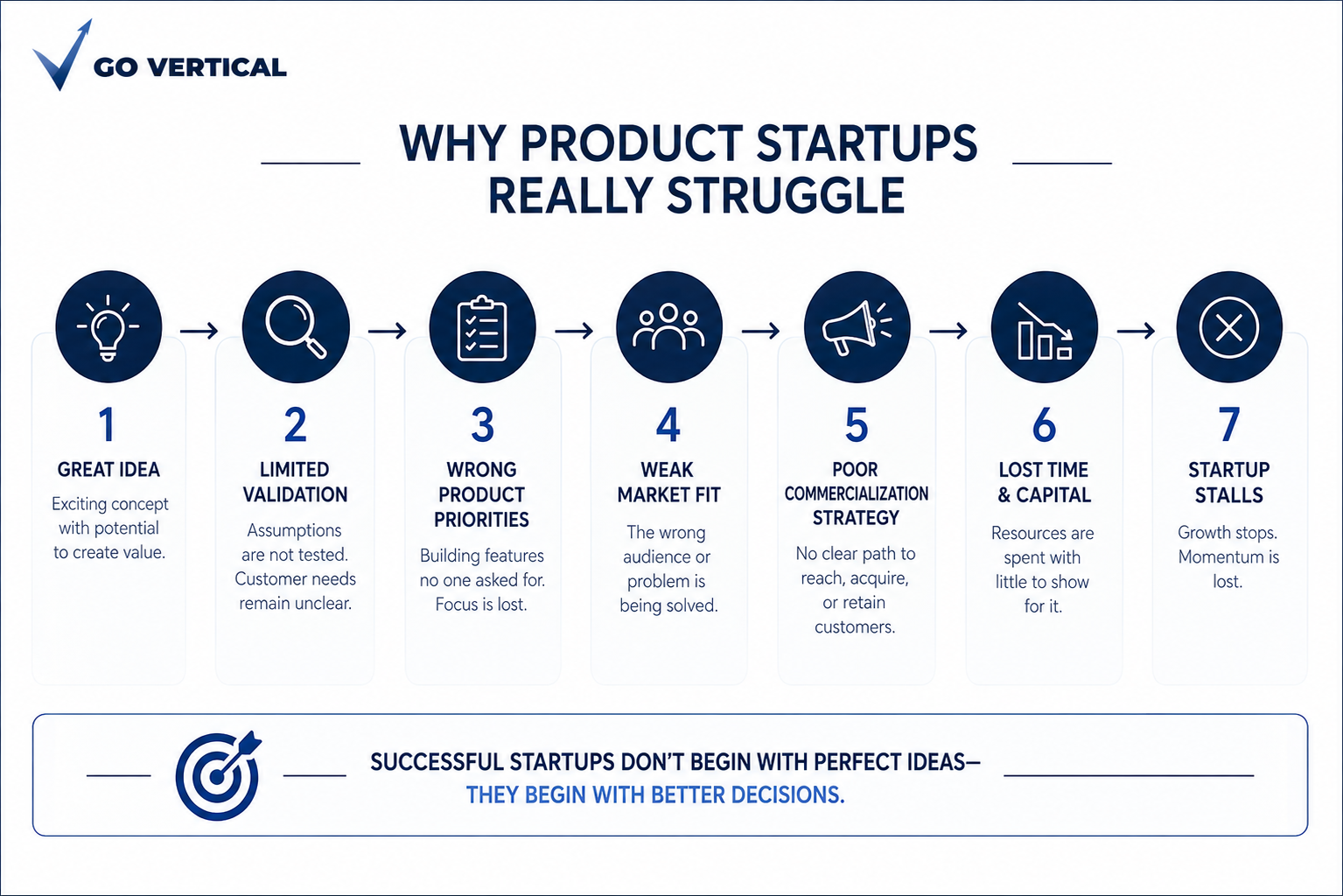
Why Product Startups Really Struggle
Successful founders rarely fail because they lack passion or creativity.
Instead, they often encounter challenges because critical decisions are made too early—or without enough information.
Building Before Validating
Excitement can make it tempting to start building immediately.
But without understanding the customer or validating the problem, founders risk developing a product the market doesn’t actually need.
Validation should come before development—not after.
Solving the Wrong Problem
A technically impressive product isn’t always a valuable one.
Products succeed when they solve meaningful problems that customers genuinely want solved.
Understanding the problem is often more important than perfecting the solution.
Trying to Build Too Much
Many founders try to launch every feature at once.
This increases development costs, extends timelines, and often delays valuable customer feedback.
The best early-stage products focus on solving one important problem exceptionally well.
Entering the Wrong Market
Even outstanding products struggle when introduced to the wrong audience.
Knowing who your first customer is—and why they’ll adopt your solution—is one of the most important decisions a founder can make.
Waiting Too Long to Think About Commercialization
Many founders focus exclusively on development.
Commercialization is left until the product is nearly complete.
Successful companies think differently.
They begin considering:
- how customers will discover the product;
- how they’ll purchase it;
- what distribution channels make sense;
- what partnerships may be valuable;
- what sustainable growth looks like.
Commercialization planning should evolve alongside product development—not after it.
Structure Reduces Risk
Some founders worry that planning slows progress.
In reality, the opposite is usually true.
Structure helps founders make better decisions before those decisions become expensive.
It creates clarity around:
- customer needs;
- product priorities;
- market opportunity;
- commercialization strategy;
- development milestones;
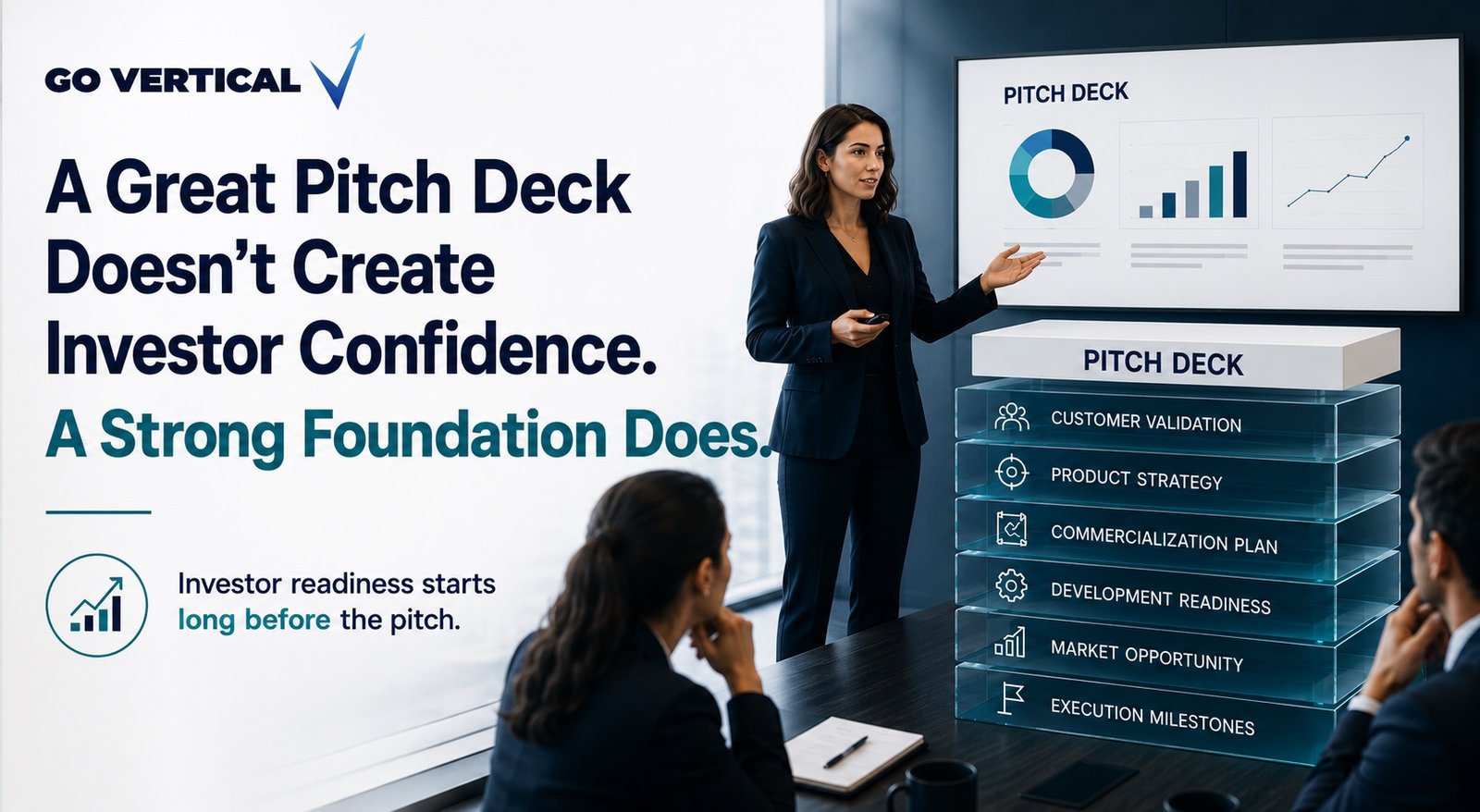
- investor readiness.
Instead of relying on assumptions, founders move forward with greater confidence.
Why Strategic Discovery Matters
One of the best ways to reduce uncertainty is through Strategic Discovery.
Strategic Discovery helps founders understand the opportunity before investing heavily in product development.
It encourages founders to evaluate:
- the customer;
- the problem;
- market demand;
- competitive positioning;
- technical feasibility;
- commercialization opportunities;
- development priorities.
Rather than rushing toward execution, founders build a roadmap based on evidence and informed decision-making.
Build Smarter with CAP
The Creation Accelerator Program (CAP) was created to help founders navigate this journey with greater clarity and confidence.
CAP is Go Vertical ICM’s year-round founder development framework, supporting innovators as they move from concept through product development, commercialization planning, and investor readiness.
For founders looking for a more structured, cohort-based experience, Hybrid CAP provides an additional pathway focused on strategic guidance, execution planning, and founder development.
Learn more about the Creation Accelerator Program:
https://govertical.co/the-creation-accelerator-program/
Build the Right Product Before You Build the Product Right
Great execution is important.
But executing the wrong strategy exceptionally well still leads to the wrong outcome.
The strongest founders spend time understanding the opportunity before investing heavily in the solution.
That work often becomes the difference between launching a product and building a successful company.
Ready to Build With Structure?
The Creation Accelerator Program (CAP) is available year-round for founders building digital and physical products who want structured support across development, commercialization, and investor readiness.
If you’re interested in joining the current Hybrid CAP cohort, applications are open until July 31.
Learn more about CAP and explore the right pathway for your startup: