

A polished pitch deck does not automatically make a company investor-ready. Learn how Hybrid CAP helps founders build the strategic foundation behind successful fundraising conversations.
A Great Pitch Deck Is Not Enough
Many founders spend months perfecting their pitch deck.
The design is polished.
The market opportunity looks compelling.
The story is inspiring.
The projections appear promising.
Yet despite all of that effort, many founders still struggle to secure meaningful investor interest.
Why?
Because investors are not investing in slides.
They are investing in businesses.
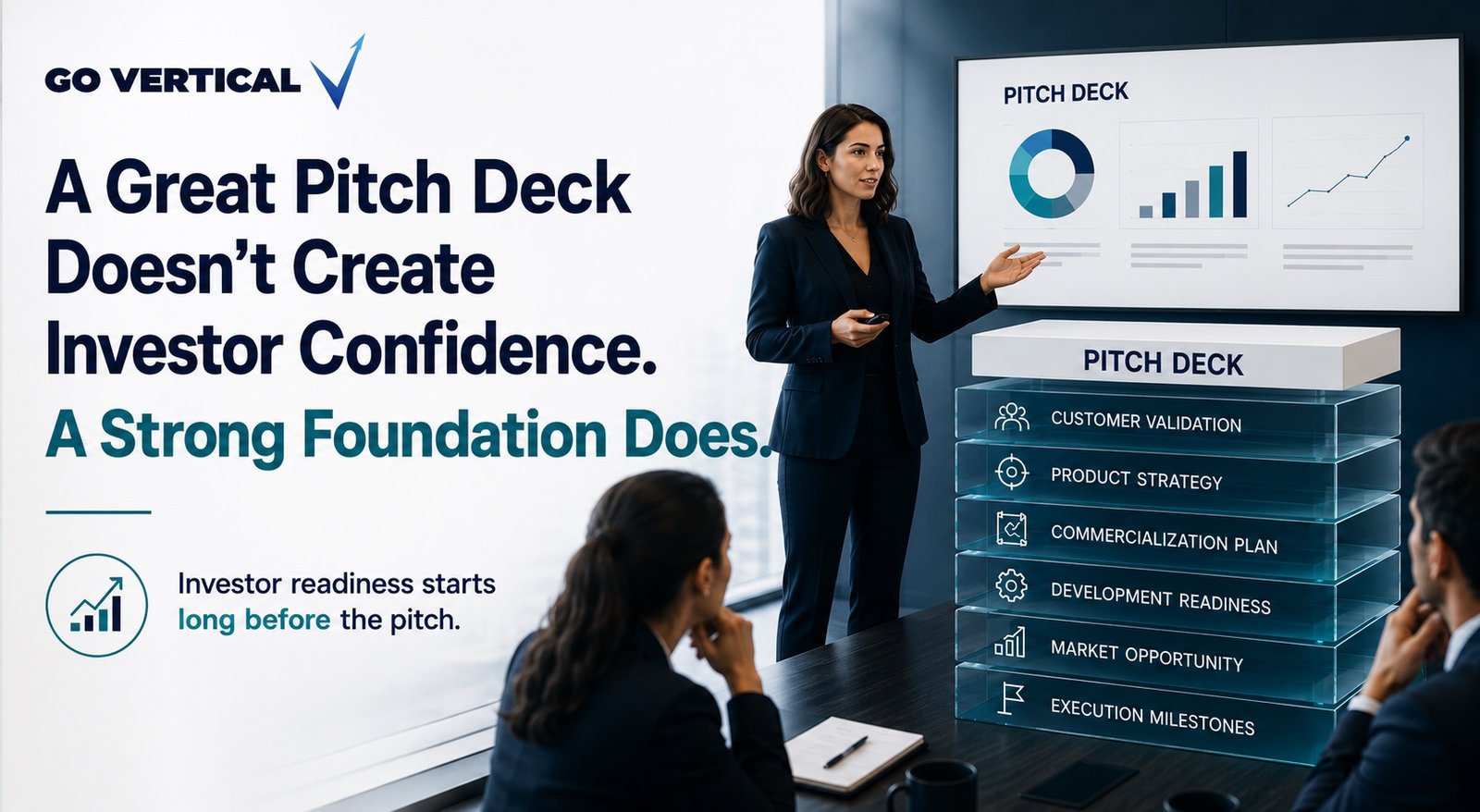
A pitch deck may open a conversation, but investor confidence is built on something deeper.
It comes from understanding the product, the market, the customer, the risks, the commercialization strategy, and the founder’s ability to execute.
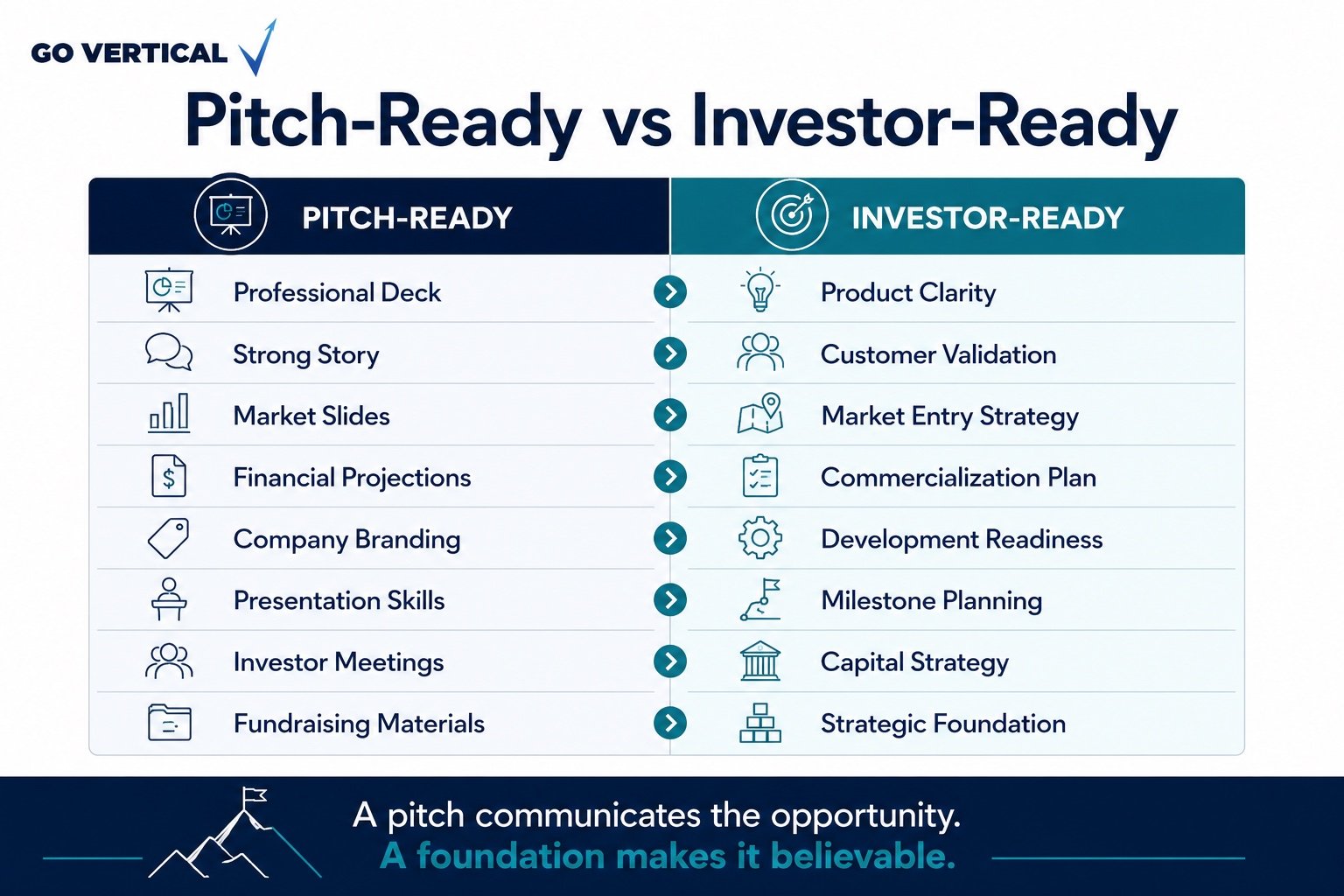
That is the difference between being pitch-ready and being investor-ready.
It is also one of the reasons Go Vertical ICM developed Hybrid CAP within its broader Creation Accelerator Program (CAP) framework.
Learn more about CAP:
https://govertical.co/the-creation-accelerator-program/
What Does Investor-Ready Actually Mean?
Investor readiness is often misunderstood.
Many founders believe it means having:
- a polished deck;
- financial projections;
- a company logo;
- a compelling story.
While those elements matter, they are only part of the picture.
Investor readiness means being able to clearly explain:
- what you are building;
- who it is for;
- why the problem matters;
- why your solution is credible;
- how the product reaches the market;
- what milestones come next;
- what risks exist;
- how capital will be used;
- why now is the right time.
Investor readiness is not about having every answer.
It is about demonstrating thoughtful, strategic clarity.
Why Founders Confuse Pitch-Ready with Investor-Ready
The confusion is understandable.
Pitch decks are visible.
Foundations are not.
Founders naturally focus on what investors will see first.
But experienced investors often evaluate what sits behind the presentation.
They look for evidence of disciplined thinking.
They ask questions such as:
- Why is this the right customer?
- How was the opportunity validated?
- Why is this the right product to build first?
- What assumptions remain unproven?
- What barriers to adoption exist?
- How does the company reach the market?
- What makes the solution defensible?
- What milestones will this funding achieve?
A founder may deliver a strong presentation and still struggle if those questions remain unclear.
The strongest fundraising conversations happen when the strategy behind the deck is just as strong as the deck itself.
The Foundation Investors Want to See
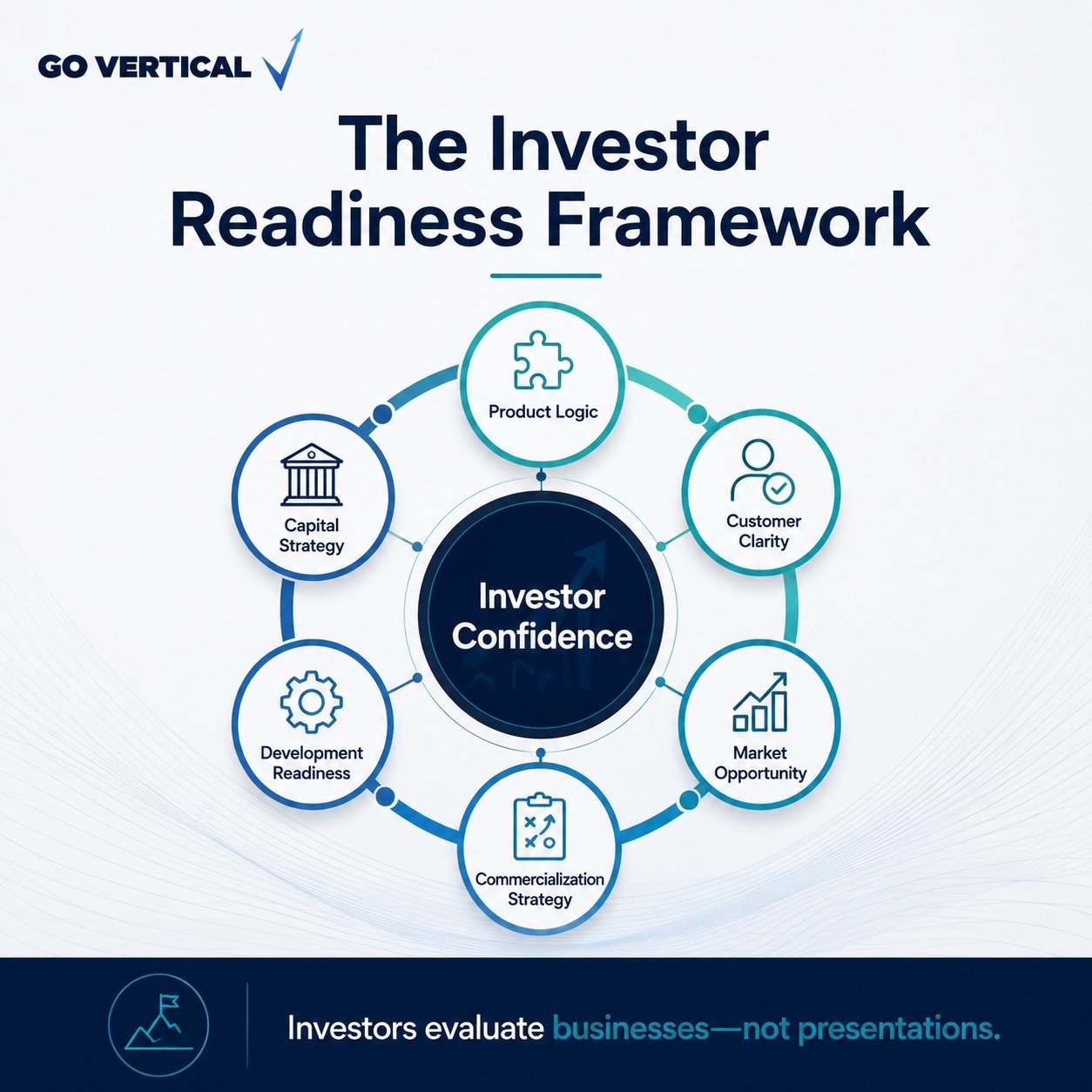
While every investor evaluates opportunities differently, most look for confidence across several core areas.
Product Logic
Why this product?
Why now?
Why is this the best solution to the problem?
Founders need a clear explanation for the choices they have made and the pathway they are pursuing.
Customer Clarity
Who is the first customer?
Who benefits most?
What evidence supports demand?
Investors want confidence that the founder understands the customer beyond assumptions.
Market Opportunity
How large is the opportunity?
Where does the company enter the market first?
What is the initial market wedge?
Successful companies often start with focused opportunities before expanding.
Commercialization Strategy
How does the product reach customers?
What drives adoption?
What partnerships, channels, or distribution strategies are required?
A strong product without a commercialization plan is rarely enough.
Development Readiness
What must happen before launch?
What technical, manufacturing, regulatory, or operational considerations exist?
Investors often evaluate whether founders understand the realities of execution.
Capital Strategy
Why are you raising capital?
What milestones will that funding unlock?
How does capital accelerate progress?
Thoughtful founders understand that funding should support a defined strategy rather than compensate for a lack of one.
How Hybrid CAP Helps Founders Build Investor Readiness
Hybrid CAP was created to help founders strengthen the foundation behind future fundraising conversations.
As part of the CAP framework, Hybrid CAP supports founders through structured planning, development guidance, commercialization strategy, and founder development support.
Areas of focus may include:
Strategic Discovery
Clarifying the opportunity, customer, market, and product pathway.
Product Development Planning
Creating a more disciplined approach to development priorities and milestones.
Commercialization Strategy
Understanding how the product reaches the market and generates adoption.
Brand Positioning
Strengthening the company’s narrative for customers, partners, and investors.
Development and Manufacturing Readiness
Helping founders prepare for the realities of execution.
Investor Readiness Preparation
Strengthening the strategic clarity that investors often evaluate during fundraising discussions.
The objective is not to guarantee funding.
The objective is to help founders become more prepared for the opportunities and conversations that come with growth.
Investor Readiness Begins Earlier Than Most Founders Think
Many founders begin preparing for investors only when they are ready to raise capital.
By that stage, the pressure is already high.
The strongest companies often start much earlier.
They focus on:
- validating assumptions;
- understanding customers;
- defining milestones;
- building market clarity;
- preparing development pathways;
- strengthening commercialization plans.
By the time they begin fundraising, they are not creating the foundation.
They are communicating it.
That distinction can make a significant difference.
Build the Company Before the Pitch
A pitch deck is important.
It helps tell the story.
But the story is only as strong as the business behind it.
Founders who focus on building strategic clarity, disciplined execution plans, and commercialization readiness often enter fundraising conversations with greater confidence and credibility.
Hybrid CAP exists to help founders develop that foundation.
Because investor readiness starts long before the first pitch.
Applications Are Open Until July 30
If you are building a digital or physical product and want to strengthen the foundation behind your future fundraising efforts, Hybrid CAP may be your next step.
Applications are open until July 30.
Apply today and begin building the structure investors look for before they invest.