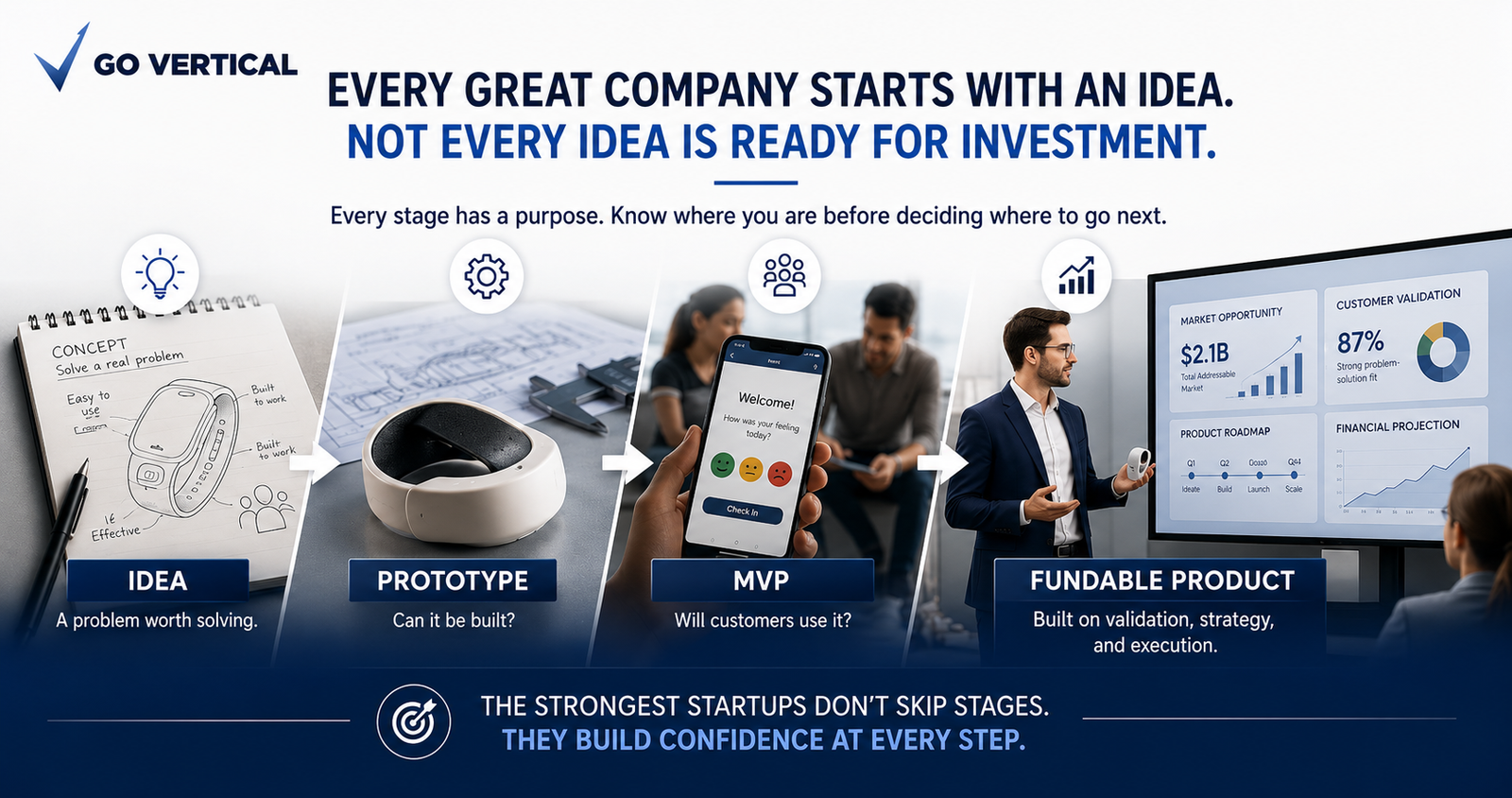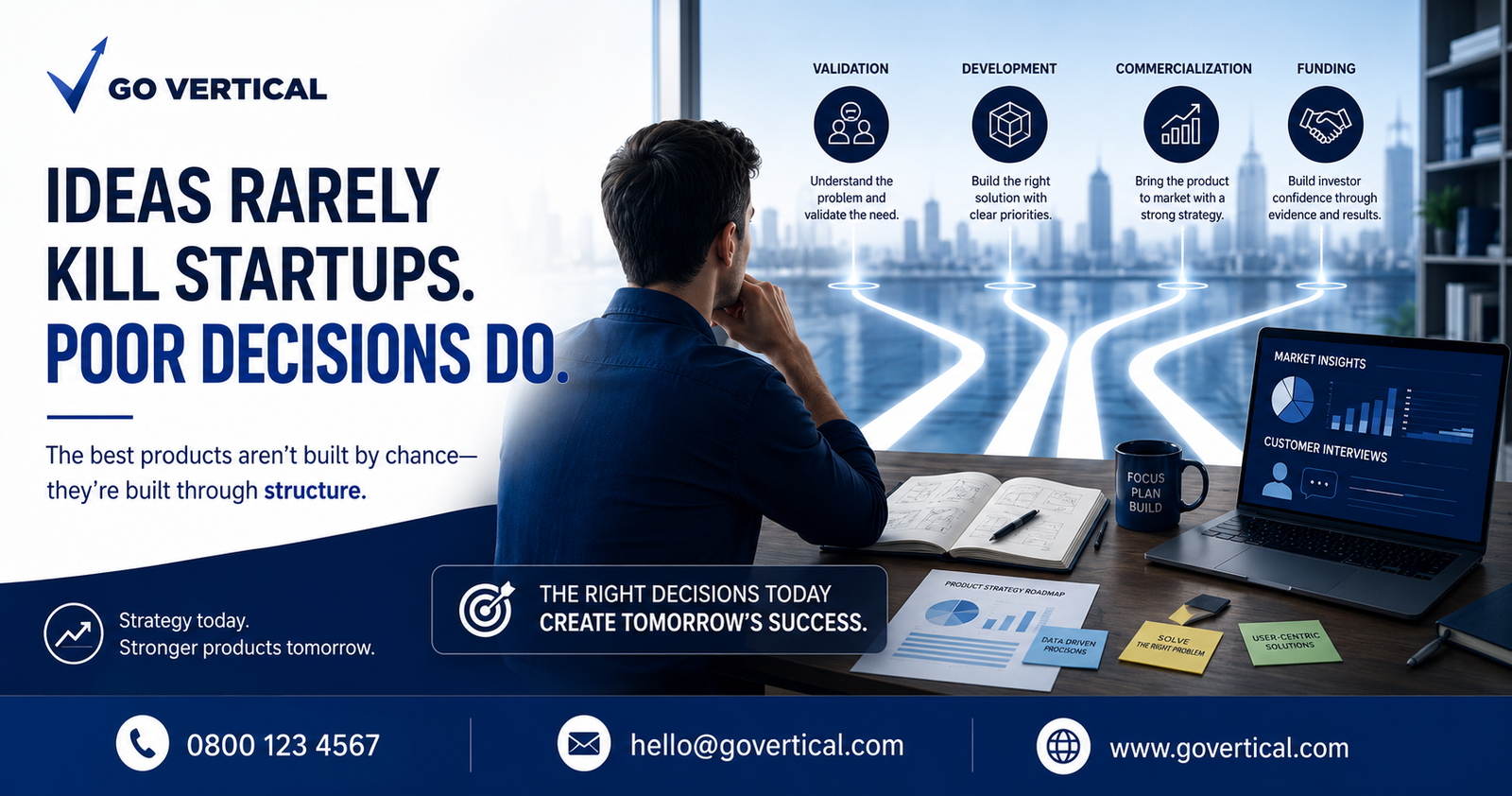


Building a product is exciting.
It is also one of the most expensive stages of building a startup.
Whether you’re developing software, a medical device, a consumer product, or a new piece of technology, product development requires significant investments of time, money, and energy.
Many founders assume that once they have a good idea, the next logical step is to start building.
Unfortunately, this is where many startups begin making costly mistakes.
Successful founders don’t build first.
They validate first.
Validation doesn’t eliminate every risk, but it significantly reduces the chances of investing in the wrong product, targeting the wrong customer, or entering the market at the wrong time.
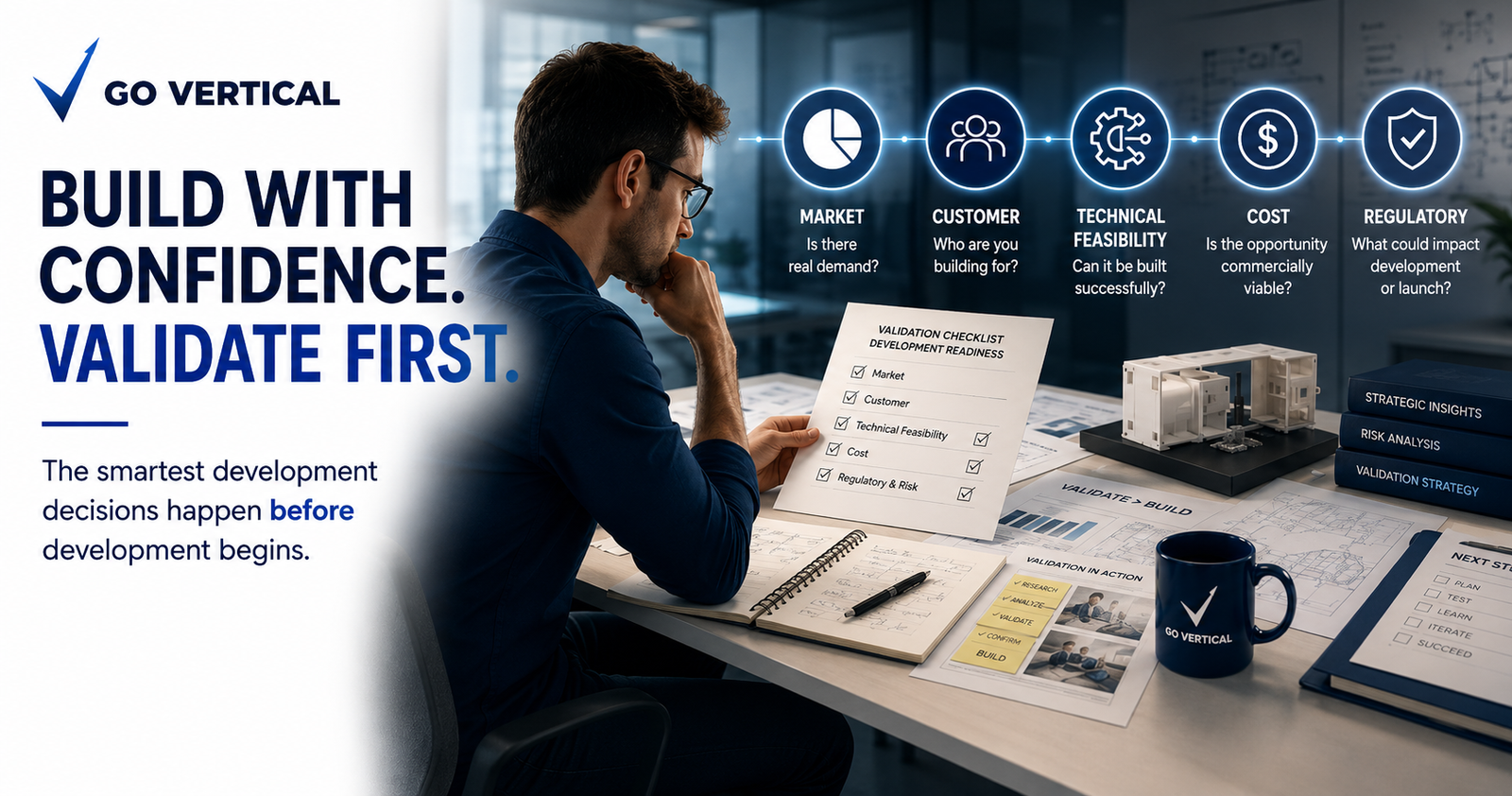
Before spending money on development, every founder should answer five critical questions.
1. Have You Validated the Market?
An innovative product means very little if there isn’t a market willing to adopt it.
One of the first questions founders should ask is whether there is genuine demand.
Market validation isn’t about proving your product is perfect.
It’s about understanding whether enough people experience the problem you’re trying to solve.
Ask yourself:
- Is this a growing market?
- Who is currently solving this problem?
- Why are existing solutions falling short?
- Is there room for another solution?
Understanding the market helps founders build products with commercial potential rather than relying on assumptions.
2. Have You Validated the User?
Markets don’t buy products.
People do.
Many startups struggle because founders focus on what they want to build instead of who they’re building it for.
Spend time understanding your future users.
Speak with potential customers.
Observe how they currently solve the problem.
Ask what frustrates them.
Ask what they would change.
Customer interviews often reveal opportunities that founders never considered.
The goal isn’t simply to collect opinions.
The goal is to understand behavior.
Products that solve real problems for real people are far more likely to succeed.
3. Is the Product Technically Feasible?
A great concept still needs to be technically achievable.
Before investing heavily in development, founders should understand whether their vision can realistically become a product.
Questions worth exploring include:
- Can this be engineered?
- What technologies already exist?
- What technical challenges need to be solved?
- How complex will development be?
- What expertise will be required?
For physical products, this may include manufacturing methods, materials, and engineering constraints.
For digital products, it may include architecture, scalability, security, and platform requirements.
Understanding technical feasibility early helps prevent expensive surprises later.
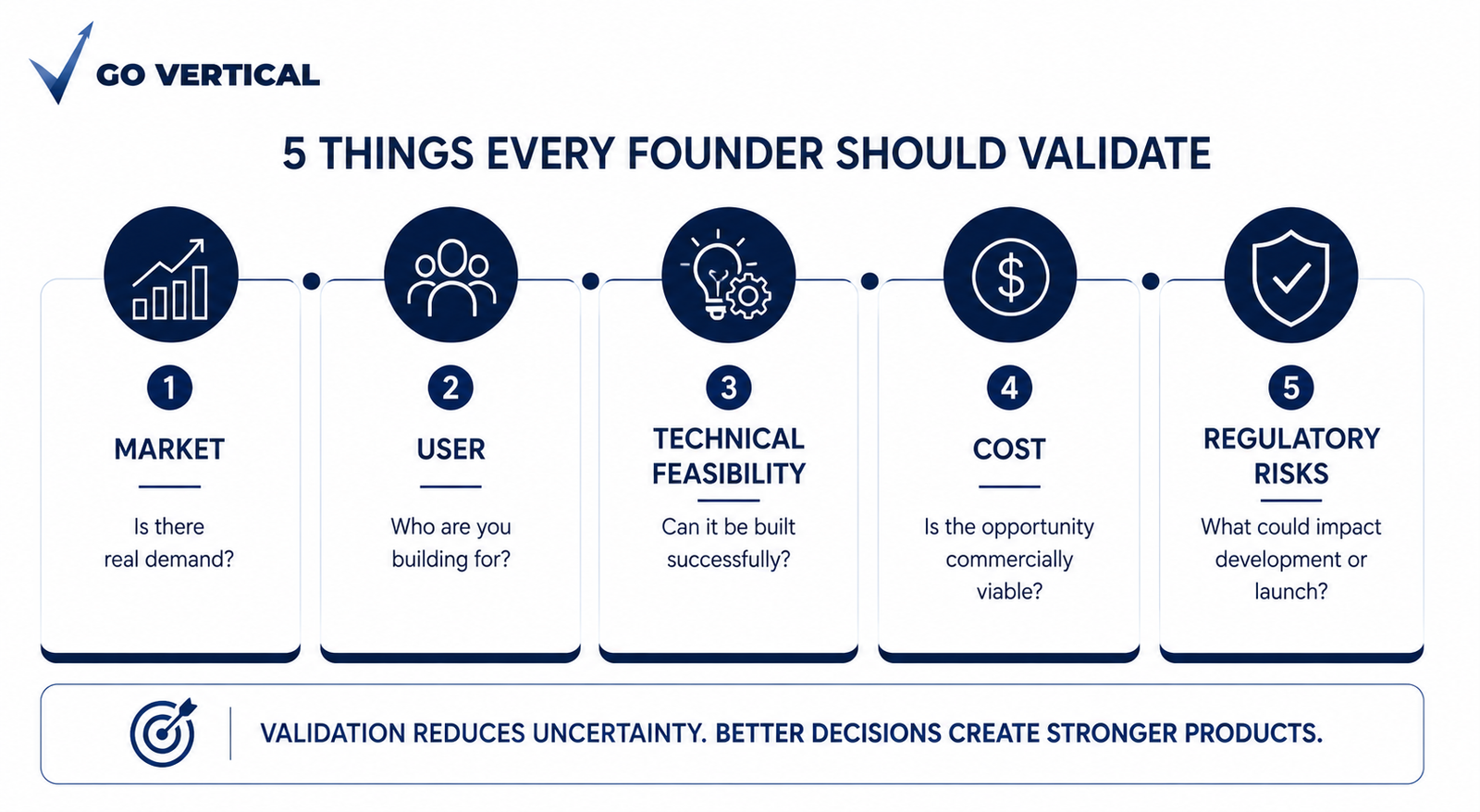
4. Have You Considered the Real Cost?
Development costs extend well beyond creating the first version of a product.
Founders should think about the complete journey.
This includes:
- product design;
- engineering;
- prototyping;
- software development;
- testing;
- manufacturing;
- packaging;
- certifications;
- marketing;
- customer acquisition.
A product may be technically possible but commercially unrealistic if development costs significantly exceed its market potential.
Understanding the financial picture early allows founders to make smarter decisions about scope and priorities.
5. Have You Evaluated Regulatory Risks?
For many industries, regulatory requirements influence nearly every stage of development.
Medical devices.
Health technologies.
Consumer products.
Food innovations.
Wellness products.
Each industry has different standards, approvals, and compliance requirements.
Founders don’t need every regulatory answer on day one.
They do need to understand how regulation could affect:
- development timelines;
- testing requirements;
- documentation;
- manufacturing;
- commercialization.
Ignoring regulatory considerations early often creates expensive delays later.
Validation Is About Reducing Uncertainty
Many founders worry that validation slows progress.
The opposite is usually true.
Validation helps founders avoid unnecessary work.
It improves decision-making.
It creates confidence.
Every assumption you validate before development begins reduces the likelihood of making expensive changes later.
The objective isn’t to eliminate uncertainty.
The objective is to reduce the uncertainty that matters most.
Strategic Discovery Helps Founders Ask Better Questions
One of the biggest advantages founders can create before development is clarity.
This is where Strategic Discovery becomes valuable.
Rather than immediately focusing on engineering or product development, Strategic Discovery helps founders better understand:
- customer needs;
- market opportunity;
- technical feasibility;
- commercialization pathways;
- development priorities;
- potential risks.
By answering these questions first, founders are able to make more informed decisions when development begins.
Build Before You Build
Many founders think product development starts with engineering.
In reality, it starts with understanding.
Understanding the customer.
Understanding the market.
Understanding the opportunity.
Understanding what should be built first.
The founders who invest time validating these areas often spend less money correcting mistakes later.
Build With CAP
The Creation Accelerator Program (CAP) helps founders build stronger companies by providing structured support before major development decisions are made.
Through Strategic Discovery, product development planning, commercialization guidance, and investor readiness, CAP helps founders move from uncertainty to informed action.
Whether you’re building a digital platform, medical technology, consumer product, or physical innovation, the goal remains the same:
Build with confidence.
Learn more about the Creation Accelerator Program (CAP):
Ready to Build Smarter?
The Creation Accelerator Program (CAP) is available year-round for founders who want structured support throughout product development and commercialization.
If you’re interested in joining the current Hybrid CAP cohort, applications are open until July 31.
The best time to validate your product is before you invest heavily in building it.
The best time to build is after you’ve built confidence in the opportunity.