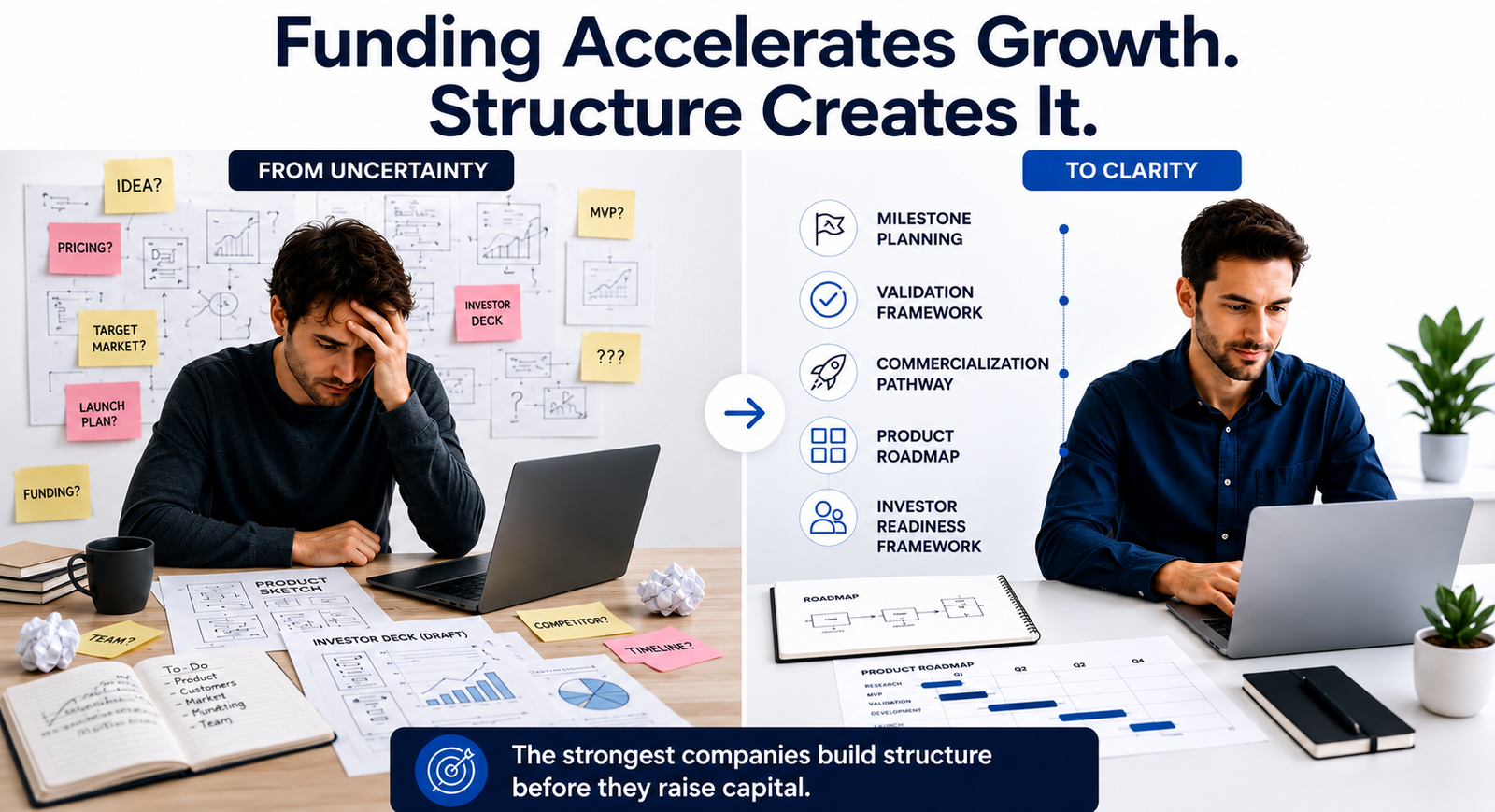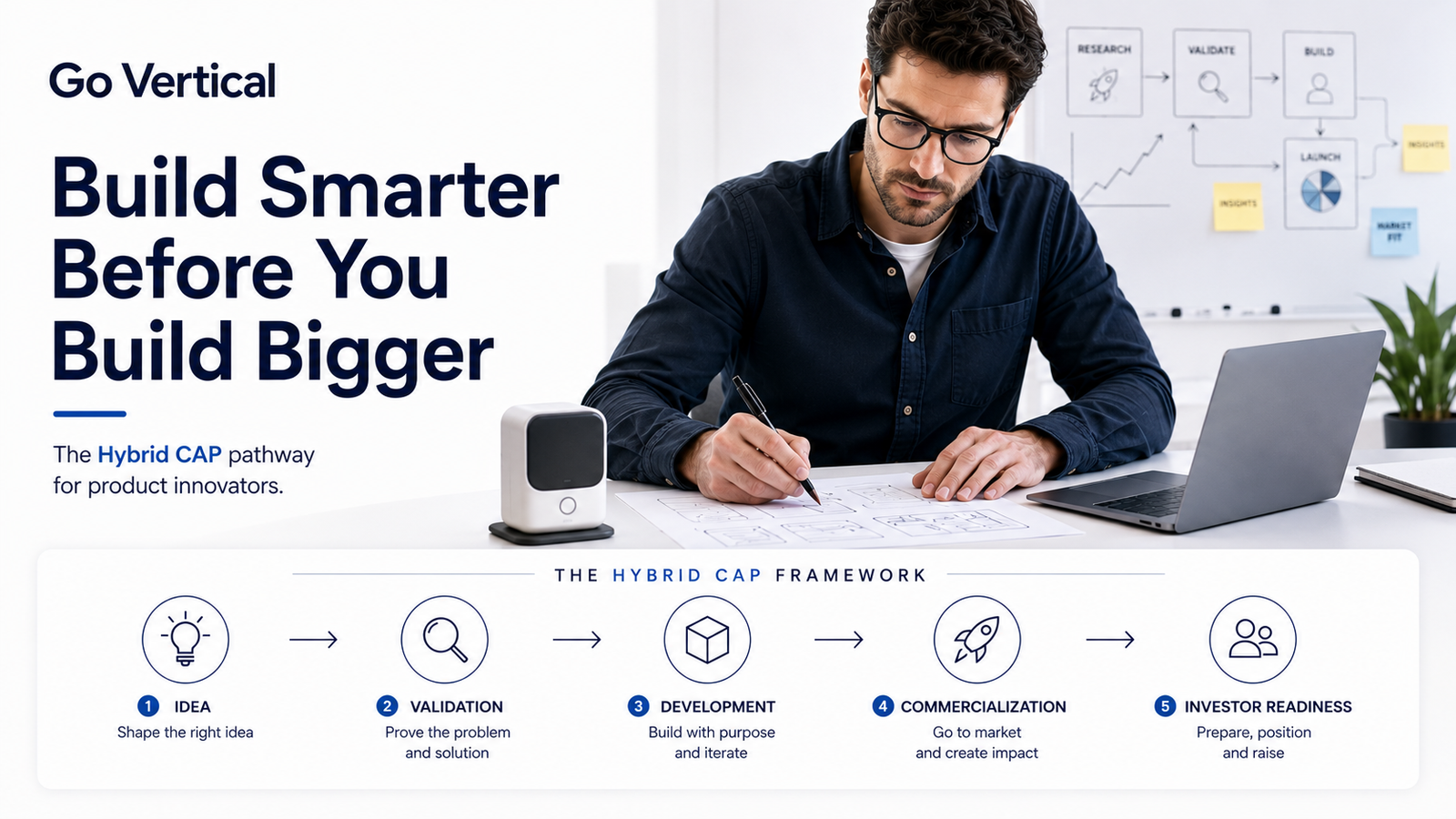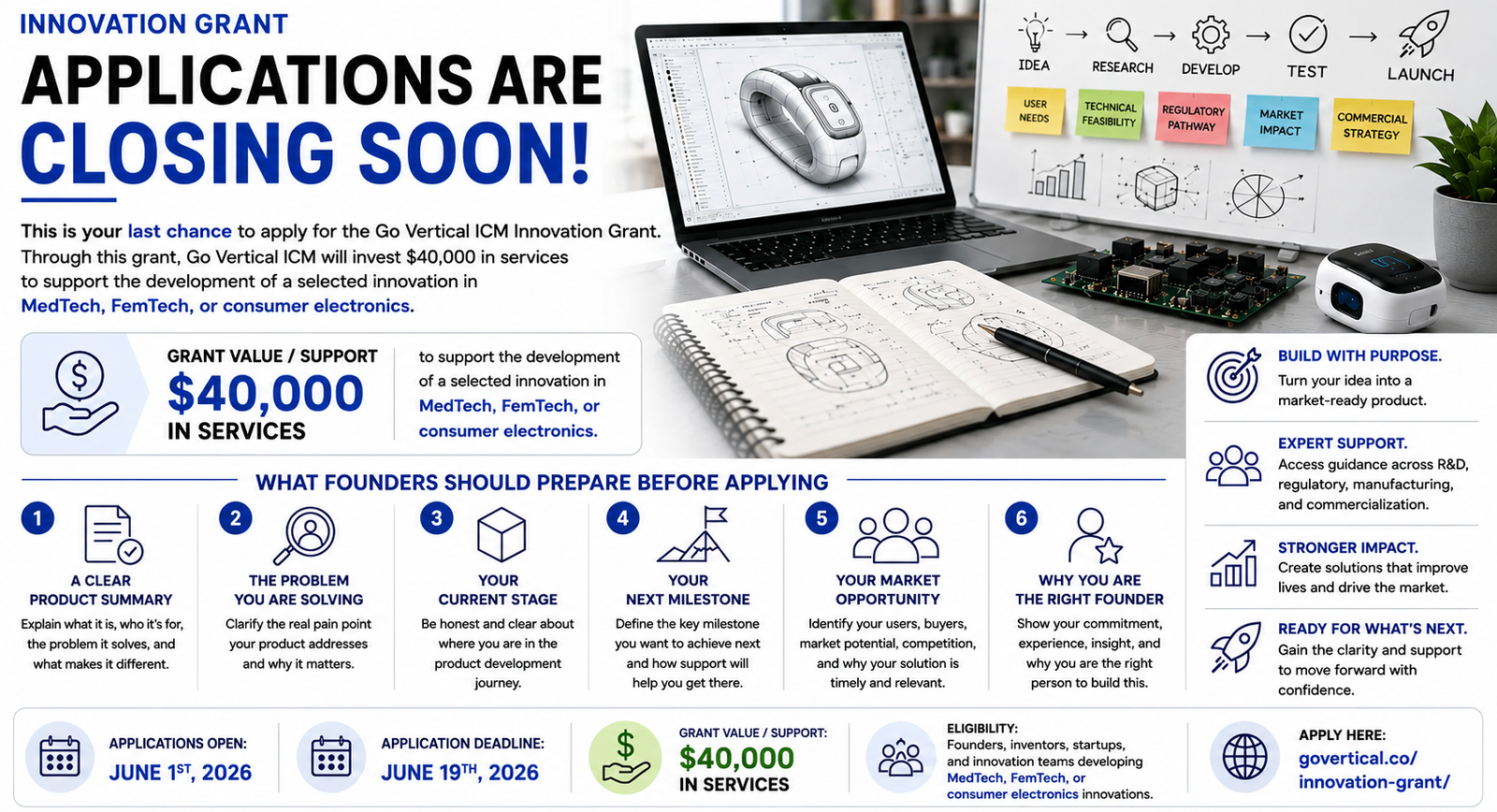


Physical product founders often feel pressure to move fast.
Build the prototype.
Find the manufacturer.
Pitch the investor.
Launch the product.
Raise the money.
But speed without clarity can become expensive.
Unlike software-only businesses, physical product companies have to make decisions across design, engineering, materials, manufacturing, cost, user behavior, compliance, brand, and commercialization.
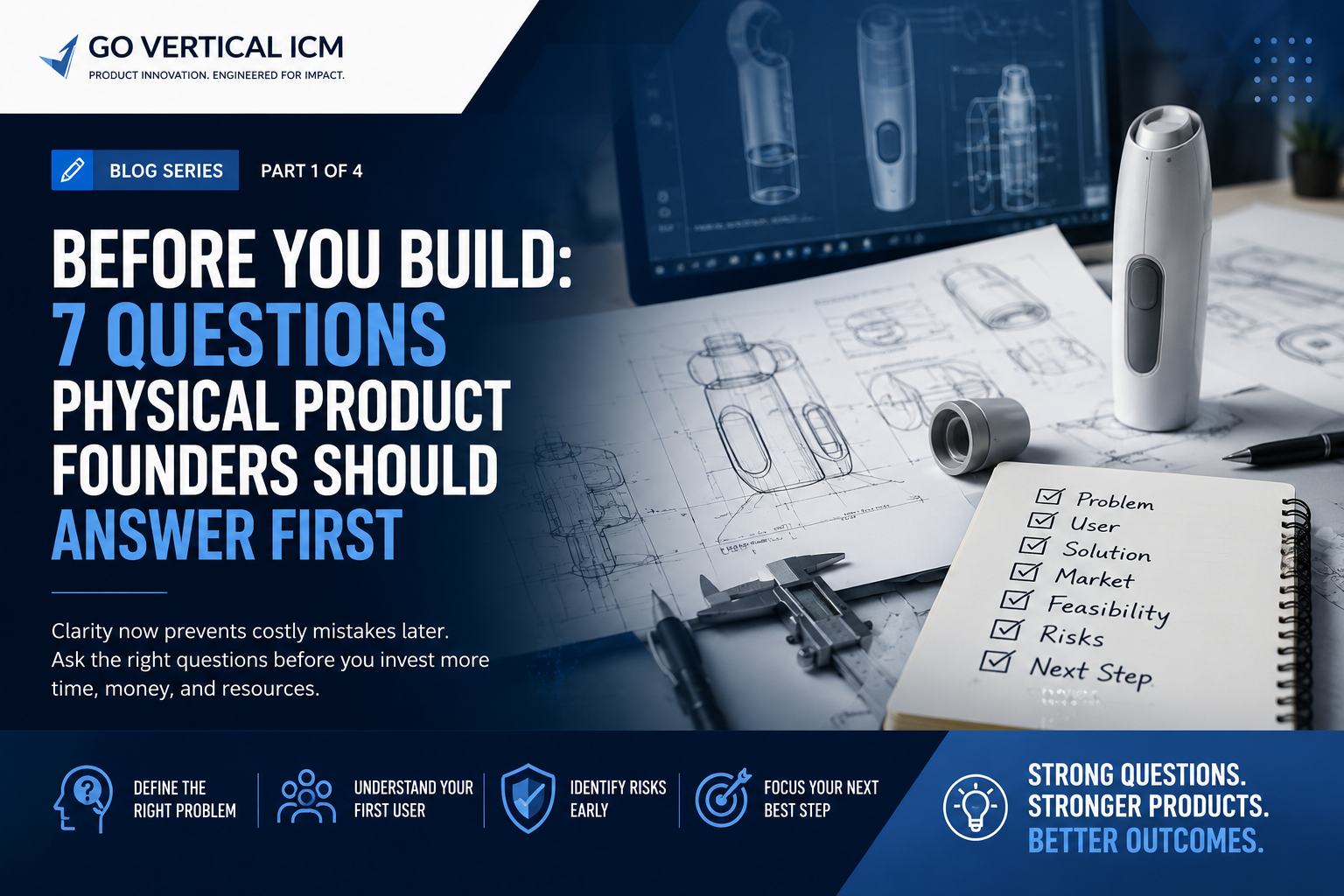
When those decisions happen in the wrong order, founders can lose time, money, and momentum. Before you build, apply, pitch, or invest more capital, ask these seven questions.
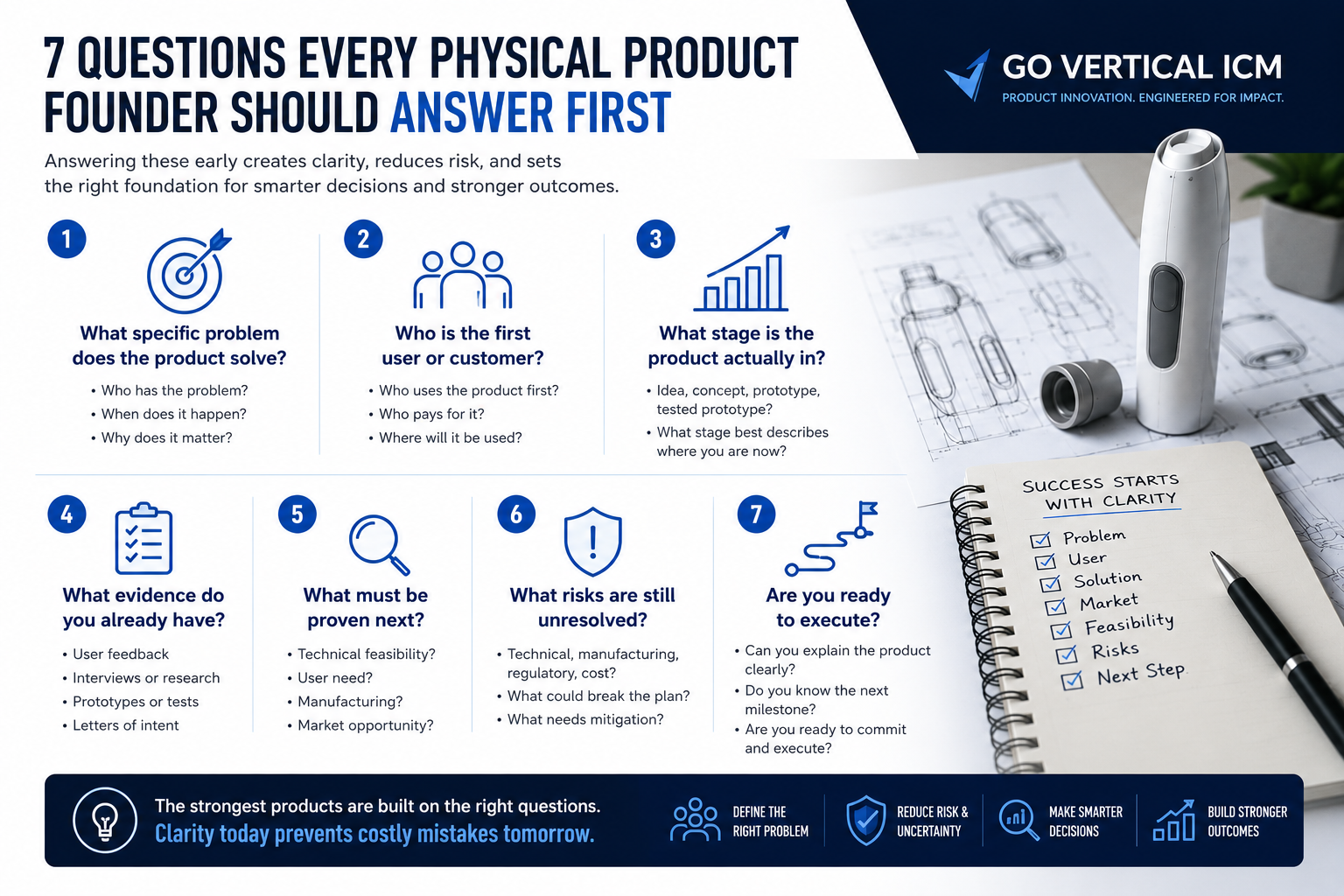
1. What specific problem does the product solve?
A strong product starts with a specific problem.
Not:
“People need better wellness tools.”
Better:
“New mothers need a safer, easier way to manage recovery support at home during the first six weeks postpartum.”
The clearer the problem, the easier it becomes to make product, customer, design, and commercialization decisions.
Ask:
- Who has the problem?
- When does it happen?
- Why does it matter?
- What happens if it is not solved?
- Why does this product need to exist?
2. Who is the first user or customer?
Many founders want to say their product is for everyone.
That usually weakens the strategy.
A strong product pathway starts with a clear first market.
Ask:
- Who uses the product first?
- Who pays for it?
- Are the user and buyer the same person?
- Where will the product be used?
- What makes this customer urgent enough to act?
A product designed for clinical use, home use, retail, or direct-to-consumer adoption will require different decisions.
3. What stage is the product actually in?
Founders often overstate or understate readiness.
Be precise.
Are you at:
- idea stage?
- sketch stage?
- concept stage?
- prototype stage?
- tested prototype stage?
- manufacturing preparation?
- early market validation?
- commercialization readiness?
This matters because every stage has a different risk profile.
If you are unclear about your stage, you are likely to make the wrong next move.
4. What evidence do you already have?
Evidence does not always mean revenue.
For early physical products, evidence may include:
- user interviews
- expert feedback
- prototype testing
- letters of interest
- pilot conversations
- waitlists
- market research
- early sales
- manufacturing conversations
The key question is:
What have you learned that makes the product more credible?
The stronger your evidence, the easier it becomes to make decisions and build confidence with stakeholders.
5. What must be proven next?
Physical product development is a sequence of proof.
You may need to prove:
- the product can be built
- users want it
- the design is usable
- the materials are appropriate
- the cost structure can work
- manufacturing is realistic
- the regulatory pathway is understood
- the product can be positioned clearly
A strong founder knows what needs to be proven next.
A weaker founder tries to prove everything at once.
6. What risks are still unresolved?
Every product has risk.
That may include:
- technical feasibility
- manufacturability
- regulatory uncertainty
- cost
- safety
- adoption
- pricing
- customer education
- distribution
Naming risks does not weaken the company.
It shows maturity.
The question is not whether risk exists.
The question is whether the founder understands it.
7. Are you ready to execute?
Execution readiness is not about having all the answers.
It is about being ready to make decisions, receive feedback, prioritize, and move through a structured process.
Ask:
- Can I explain the product clearly?
- Do I know the next milestone?
- Am I open to changing assumptions?
- Can I provide materials, feedback, and decisions on time?
- Do I understand what this product needs before market?
Physical product development rewards clarity and discipline.
It punishes scattered execution.
A strong product does not move forward because the founder is passionate.
It moves forward because the founder understands:
- the problem
- the customer
- the product stage
- the evidence
- the risks
- the next milestone
- the execution pathway
- Before you build, pause and ask:
Is this product ready for the next step, or do we need to clarify the path first?
If you are building a physical product and need clarity around feasibility, development priorities, manufacturing readiness, or commercialization, start by assessing your product pathway before moving deeper into execution.
Check out our Strategic Discovery Program