


The U.S. patent system protects some of the world’s most innovative ideas, encouraging investment in research, technology, and entrepreneurship. Every year, the U.S. Patent and Trademark Office (USPTO) receives more than 600,000 utility patent applications, yet not every invention completes the journey to an issued patent. Studies of USPTO prosecution data estimate that approximately one-third of patent applications are abandoned before they are granted, representing hundreds of thousands of innovations that never progress through the full patent process.
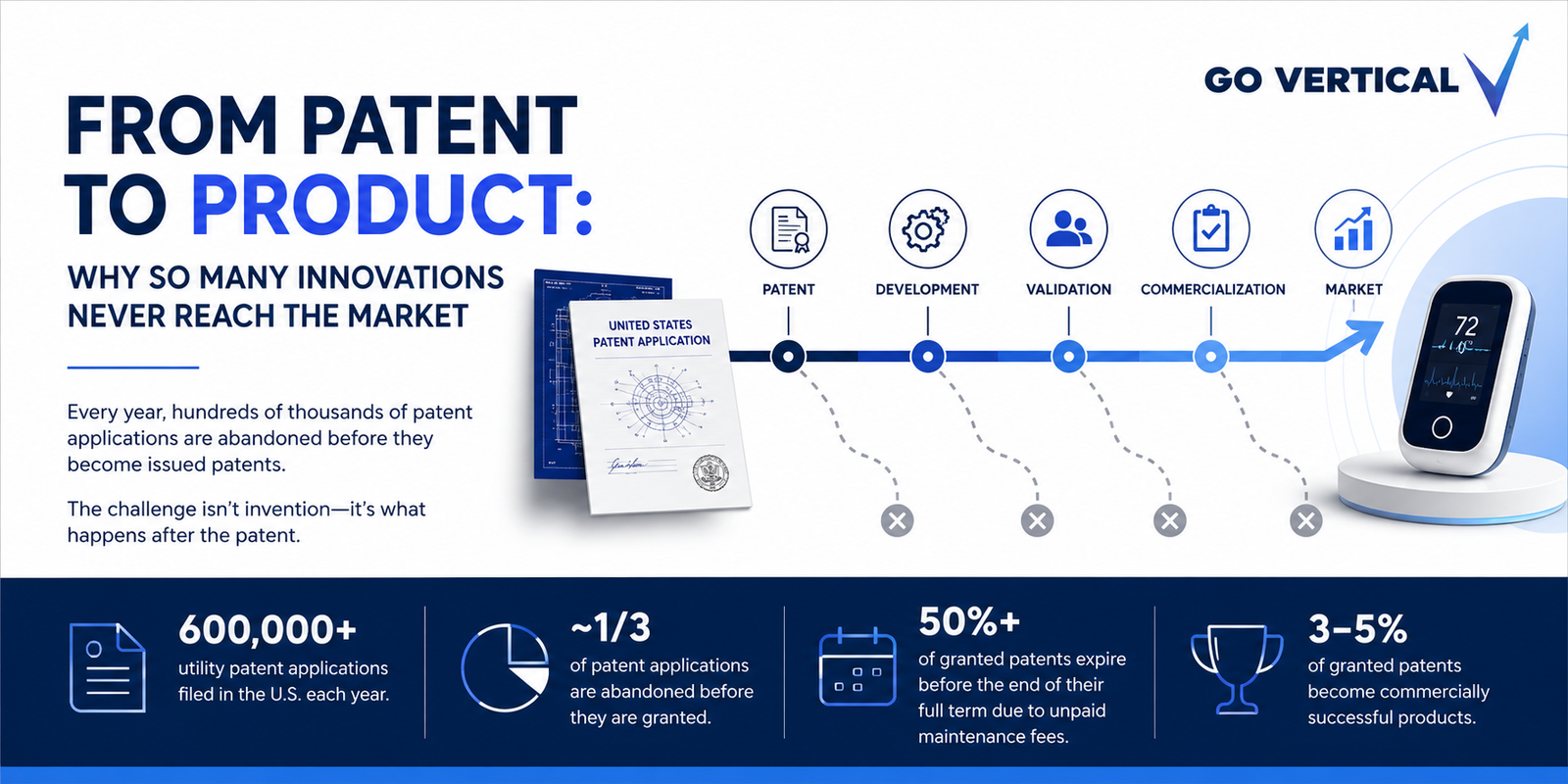
Patent abandonment is often misunderstood as evidence that an invention has failed. In reality, many applications are abandoned because founders encounter financial, technical, or commercial challenges long before they reach the market. The data highlights an important reality: protecting an idea is only one part of building a successful business.
The Numbers Behind Patent Abandonment
- Over 600,000 utility patent applications are filed with the USPTO each year.
- Approximately one-third of U.S. patent applications are abandoned before they mature into an issued patent.
- Even after patents are granted, more than half eventually expire before the end of their full term because maintenance fees are not paid.
- Research suggests that only 3-5% of granted patents ultimately become commercially successful products.
These figures demonstrate that while innovation remains strong, commercialization continues to be one of the greatest challenges facing inventors and early-stage companies.
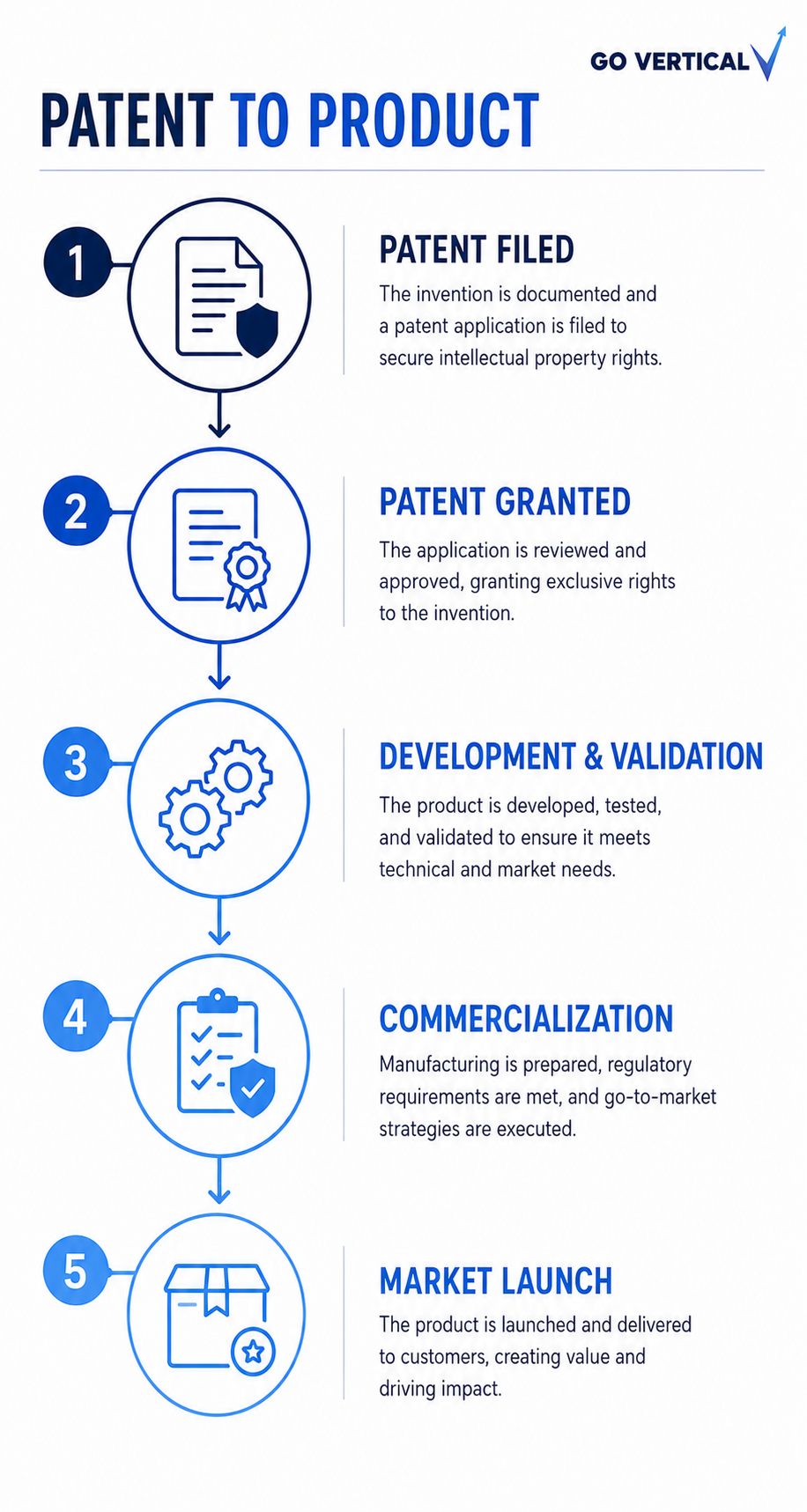
Why Are Patent Applications Abandoned?
Patent abandonment is rarely the result of poor innovation. More commonly, it reflects the practical realities of bringing a product to market.
1. Limited Funding
Patent prosecution often spans several years, requiring ongoing legal fees alongside product development, testing, manufacturing, and business operations. Many early-stage companies simply cannot sustain both.
2. Market Validation
As founders engage with customers, they may discover that market demand is weaker than expected or that the product requires significant changes. In these cases, continuing the patent process may no longer align with the business strategy.
3. Commercialization Challenges
Developing a successful product requires far more than intellectual property. Engineering, regulatory planning, manufacturing, reimbursement strategies, and go-to-market planning all influence whether an invention becomes commercially viable.
4. Strategic Business Decisions
Technology evolves quickly, and startups frequently pivot as they learn more about their customers and markets. Some patent applications are abandoned because the business has identified a stronger opportunity elsewhere.
The Bigger Picture
Patent protection remains an important part of innovation, but it should not be viewed as the finish line. A patent protects an invention, but it does not validate customer demand, establish manufacturing capability, or create a commercialization strategy.
For founders, particularly those developing healthcare technologies, medical devices, and regulated products, long-term success depends on building a clear pathway from concept to market. Product validation, development planning, regulatory readiness, and commercialization strategy are just as important as intellectual property protection.
At GoVertical, we believe that the most successful innovations are supported by both strong intellectual property and a structured commercialization strategy. By combining product development, market validation, regulatory planning, and execution, founders can significantly improve their chances of turning protected ideas into successful businesses.
Sources: U.S. Patent and Trademark Office (USPTO); USPTO Patent Statistics; Boston College Law Review, The Hidden Value of Abandoned Applications to the Patent System (2020); USPTO Manual of Patent Examining Procedure (MPEP).